
We create knowledge that brings new solutions for society and practice.
Alexander Dubček University of Trenčín is a place where education, scientific knowledge and research come together.
What we work on at the university
Our researchers address current challenges in new materials, glass and nanotechnology, advanced manufacturing technologies, healthcare and biomedicine.
Glass and ceramics
Transparent luminescent ceramics, bioactive glasses and glass-ceramic composites.
Plasma and surfaces
Diffuse coplanar surface discharge for filler activation and surface treatment of elastomers.
Polymers and composites
Filaments from waste materials, lignin and nutshell powder as additives.
Health and biomedicine
Public health, laboratory diagnostic methods and hyperbaric oxygen therapy.
Economics and human capital
Labour market and human resources, regional development, entrepreneurship, tourism.
Mechanical engineering
Design of machinery and special technology, research into technical materials, modern manufacturing and additive technologies, diagnostics and reliability of equipment.
Formula
Design, construction and testing of a student formula car with a focus on technical innovation, engineering solutions and teamwork.
Political processes and social challenges
Research into political processes, international relations, political parties, media and public opinion, as well as democracy and the prevention of extremism.
Research centres
Research at TnUAD takes place in specialised research centres and laboratories and is based on cooperation between experts from various fields, academia, research institutions and industry.
Research equipment
University equipment is also available to companies and external partners. Contract research, measurements and testing are coordinated by the Technology Transfer Centre.
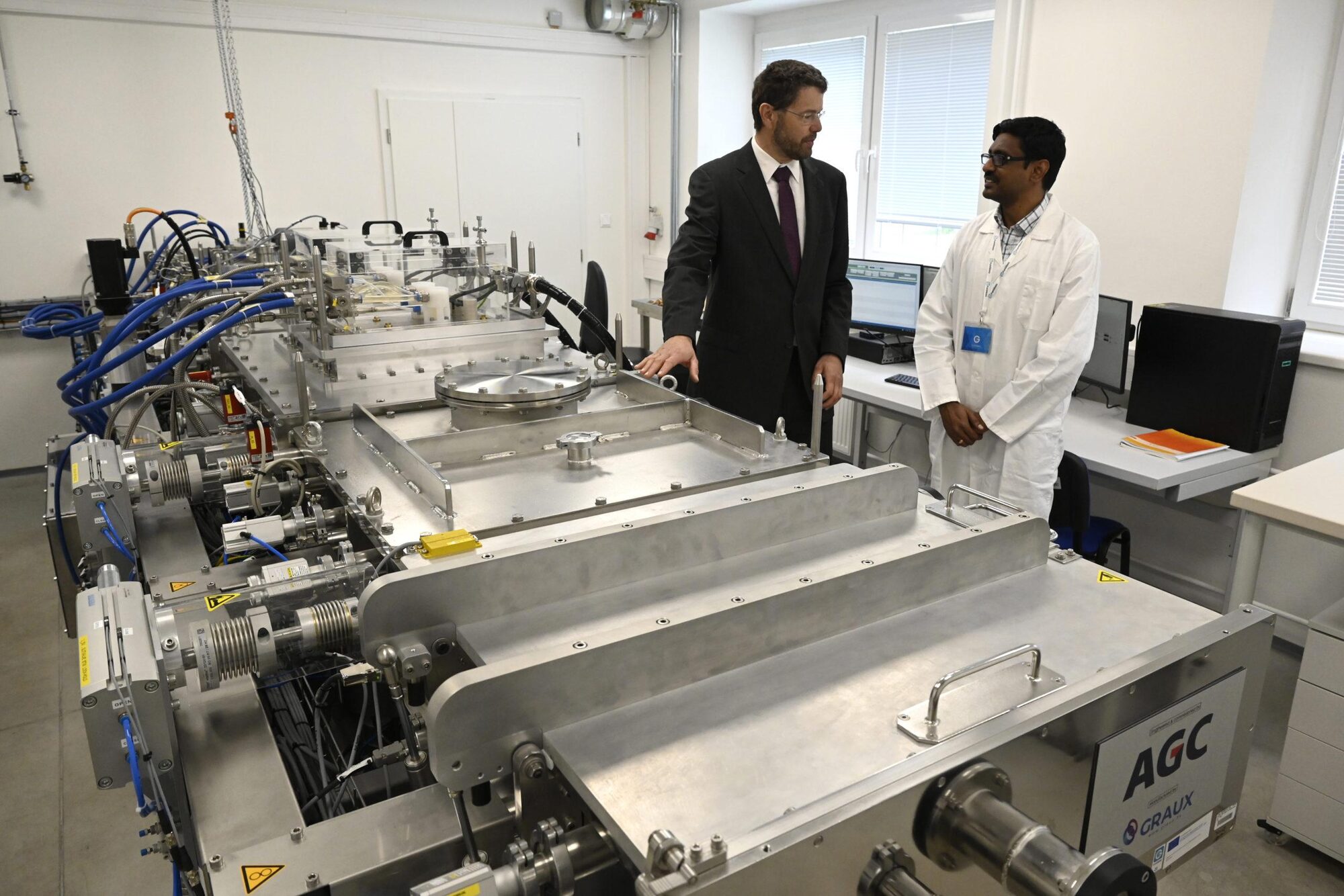
Two glass coating technologies in one system
The pilot coating system is a specialised device that deposits very thin layers of various materials onto glass, changing its properties. Using vacuum, plasma and precisely controlled processes, it creates multilayer coatings that can improve the optical properties of glass or increase its durability. It is used mainly to research and test new surface treatments before they are introduced into industrial production.
Need advice on a call or a project?
The Science and Research Office is located at the Rector's Office. Write to us or call us and we will get back to you.